Robotic Inspection for
Energy & Utilities
Robotic inspection for energy & utilities uses autonomous robots and drones to inspect power-generation equipment, substations, pipelines, and water-treatment facilities on a repeatable schedule — reaching hazard zones and remote assets human teams cannot safely or economically cover, and documenting every pass. Actel Robotics deploys it across Texas, Louisiana, and Oklahoma.
Power generation facilities, substations, pipelines, and water treatment plants require inspection frequency and hazard-zone access that human teams cannot safely or economically provide. Autonomous robotics fill the gap.
The Inspection Gap
in Energy Infrastructure
Energy and utility infrastructure is aging faster than the workforce capable of inspecting it. The average age of the U.S. electrical grid exceeds 40 years. Water infrastructure is similarly aged. Natural gas pipeline networks span hundreds of thousands of miles, much of it in remote or hazardous terrain. The inspection requirements for this infrastructure are growing more stringent — NERC-CIP compliance, PHMSA pipeline safety regulations, EPA environmental monitoring — while the pool of qualified inspection technicians shrinks.
The consequences of inspection gaps are severe. An undetected hot spot on a transformer can escalate to a catastrophic failure, outage, and regulatory investigation. A corroded fitting on a gas pipeline can become a rupture. A substation breach can disable power for an entire region. The cost of these failures — in direct repair costs, regulatory penalties, and cascading outage impacts — dwarfs the cost of the inspection programs that would have prevented them.
Hazardous Zone Access
High-voltage substations, energized switching equipment, and areas with hydrogen sulfide or toxic gas exposure require special permits, PPE, and safety protocols that make frequent manual inspection prohibitively expensive.
Inspection Frequency
Regulatory compliance requires documented, frequent inspection of thousands of assets. Manual inspection cannot scale to meet both the frequency and the coverage requirements cost-effectively.
Remote Infrastructure
Substations, pipeline segments, and water treatment plants are often in remote locations — making manual inspection expensive in travel time, mobilization cost, and personnel risk.
Autonomous Substation and Facility Inspection
Boston Dynamics Spot is the platform of choice for power generation and utility inspection. National Grid uses Spot for autonomous patrol of outdoor electrical substations — detecting overheating transformers, reading analog gauges, and documenting equipment conditions. Estimated annual labor savings: $150,000-$200,000 per site.

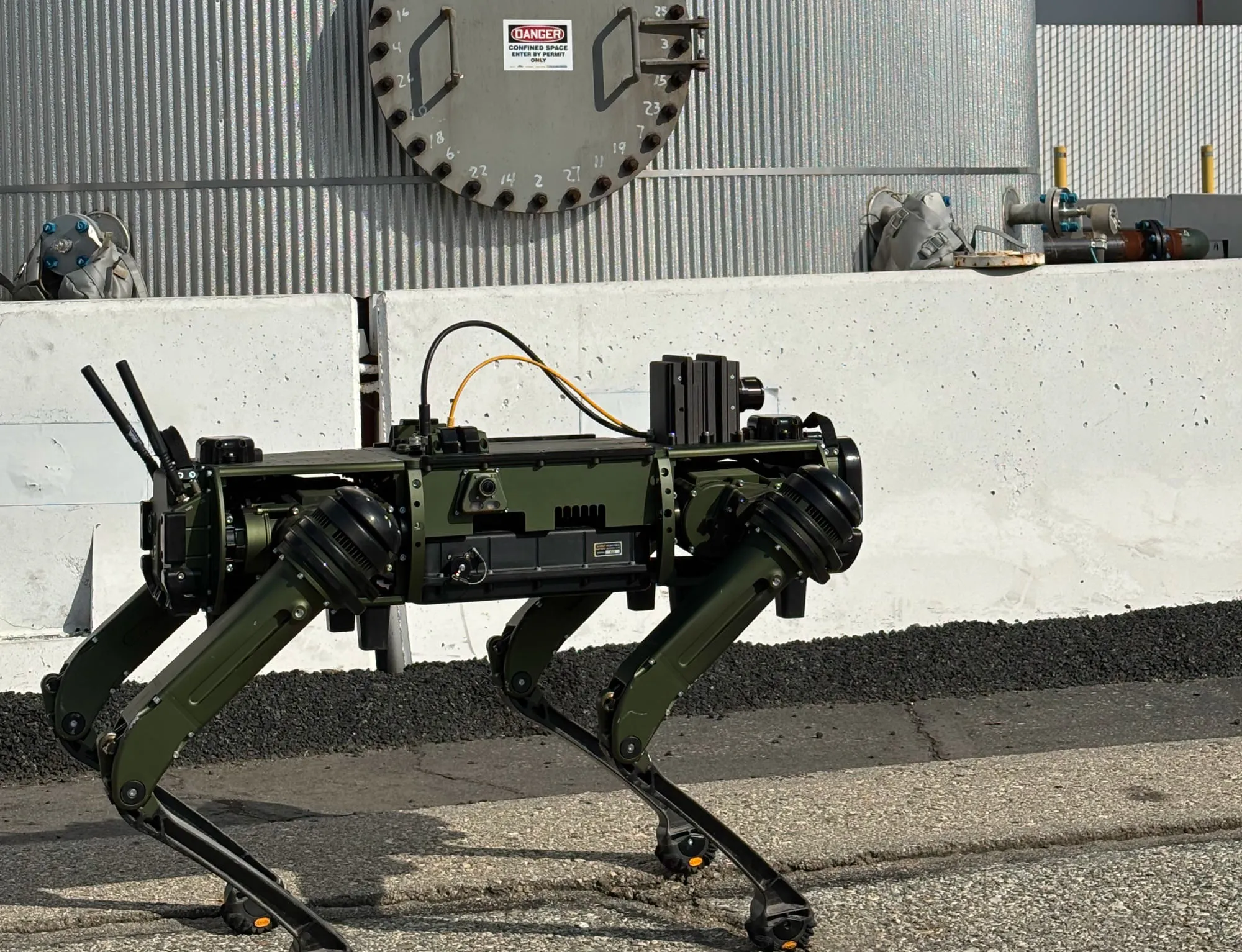
All-Weather Perimeter Security for Utility Sites
Substations, water treatment plants, and energy infrastructure are high-value targets for vandalism, copper theft, and deliberate sabotage. Ghost Robotics Vision 60 provides all-terrain, all-weather perimeter security — in Texas humidity, Louisiana rain, and Oklahoma temperature swings — without shift changes or coverage gaps.
Spot Cam 2: Advanced industrial inspection capabilities
Spot at Cargill — AI-powered facility inspection
Robotics for Energy & Utilities — FAQ
What can inspection robots monitor at energy and utility sites?
Autonomous robots capture thermal and visual data on turbines, transformers and substations, switchgear, pipelines, and water-treatment equipment — flagging hot spots, corrosion, and abnormal conditions on a repeatable schedule.
How do robots reduce hazard-zone exposure?
They enter energized, elevated, or otherwise hazardous areas in place of people, capturing the same data without the safety risk — and they can inspect far more frequently than a human team can safely sustain.
Are inspection missions autonomous and repeatable?
Yes. Once a route is programmed, the robot runs the identical mission on a schedule, producing consistent, comparable data over time that supports condition-based and predictive maintenance.
Who deploys energy inspection robotics in Texas?
Actel Robotics, an authorized integrator serving Texas, Louisiana, and Oklahoma, handles assessment, payload and route configuration, integration, training, and ongoing support from our Sugar Land headquarters.