Fulfillment AMRs vs. Traditional Picking
& Fixed Automation
When picking can't keep up, there are three paths: hire more pickers, install fixed goods-to-person automation, or deploy autonomous mobile robots (AMRs). Here's how AMRs compare to manual picking and fixed automation on productivity, flexibility, capital cost, and how fast you can scale.
Flexible Robots vs. More People or Fixed Systems
Manual picking is flexible and cheap to start, but pickers spend well over half their time just walking, throughput is capped by headcount, and peak season means hiring and training temporary labor that's hard to find.
Fixed goods-to-person automation (conveyor, AS/RS, shuttle systems) delivers high steady-state throughput, but demands heavy capital, long installation, and a rigid layout that's expensive to change when your volume or product mix shifts.
Fulfillment AMRs (like the Locus Robotics platform Actel deploys) sit in between: they lift picking productivity 2–3x by bringing work to the associate on your existing racking, deploy in weeks, scale up or down by adding or removing bots, and don't lock you into a fixed layout — often on a robotics-as-a-service model that keeps capital light.
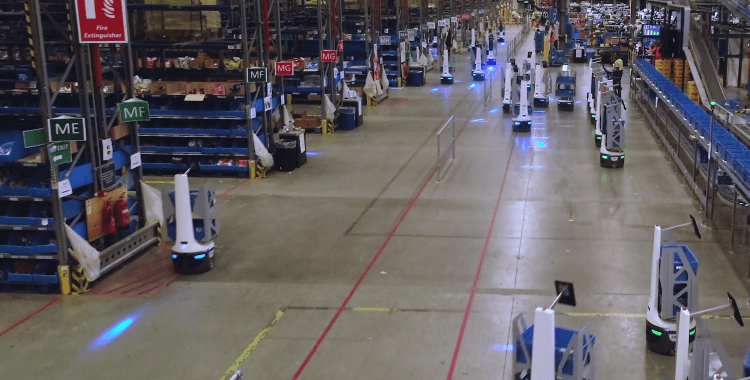
AMRs bring the work to the picker on existing racking — no fixed conveyor to install
AMRs vs. Manual Picking vs. Fixed Automation
| Factor | Fulfillment AMRs (Locus) | Manual Picking / Fixed Automation |
|---|---|---|
| Picking Productivity | 2–3× vs. manual | Manual: baseline | Fixed: high but rigid |
| Upfront Capital | Low — often robotics-as-a-service | Manual: low | Fixed automation: very high |
| Deployment Time | Weeks, on existing racking | Manual: none | Fixed: many months |
| Layout Flexibility | High — works with your current layout | Manual: high | Fixed: rigid, costly to change |
| Scales for Peak | Add/remove bots as volume changes | Manual: hire/train | Fixed: capped by design |
| Labor Dependence | Fewer walking miles, higher output per associate | Manual: fully labor-bound |
| Throughput Ceiling | High and elastic | Manual: headcount-limited | Fixed: highest, fixed |
| Best Fit | Growing / variable e-commerce & 3PL volume | Very low volume, or very high stable volume |
Figures are directional and vary by facility, SKU profile, and configuration — contact Actel Robotics for an assessment scoped to your operation.
Which Fulfillment Approach Fits You?
Choose fulfillment AMRs if…
Manual or fixed automation may fit if…
AMRs vs. Traditional Picking FAQ
How much do fulfillment AMRs improve picking productivity?
AMRs like the Locus platform typically lift picking productivity 2–3x versus manual cart picking by eliminating most of the walking — the robots bring work to the associate and optimize travel across the floor.
Are AMRs better than fixed conveyor or AS/RS automation?
It depends on your volume and how much it varies. Fixed goods-to-person automation delivers the highest steady-state throughput but needs heavy capital, long installs, and a rigid layout. AMRs deploy in weeks on your existing racking, scale up and down with demand, and keep capital light — a better fit for growing or variable volume.
Do AMRs require me to change my warehouse layout?
No. AMRs work within your existing racking and aisles, so there's no rip-and-replace. That's a key advantage over fixed automation, which locks you into a specific layout.
Can AMRs handle seasonal peaks?
Yes. Because Locus uses a flexible fleet model, you can add bots for holiday and promotional peaks and scale back afterward — absorbing demand spikes without hiring and training proportional headcount.
Is manual picking ever still the right choice?
For very low, steady order volume where labor is available and inexpensive, manual picking's near-zero capital can make sense. AMRs pay off as volume grows, labor gets scarce or costly, or peaks strain your current pick operation.
AMRs, More Pickers, or Fixed Automation?
Tell us your order volume, how much it swings, and how you pick today, and we'll give you a straight take on whether AMRs would pay off — and scope a deployment if they would.
By submitting this form, you agree to be contacted by Actel Robotics regarding your inquiry. We do not share your information with third parties.