Hardware & Sensors
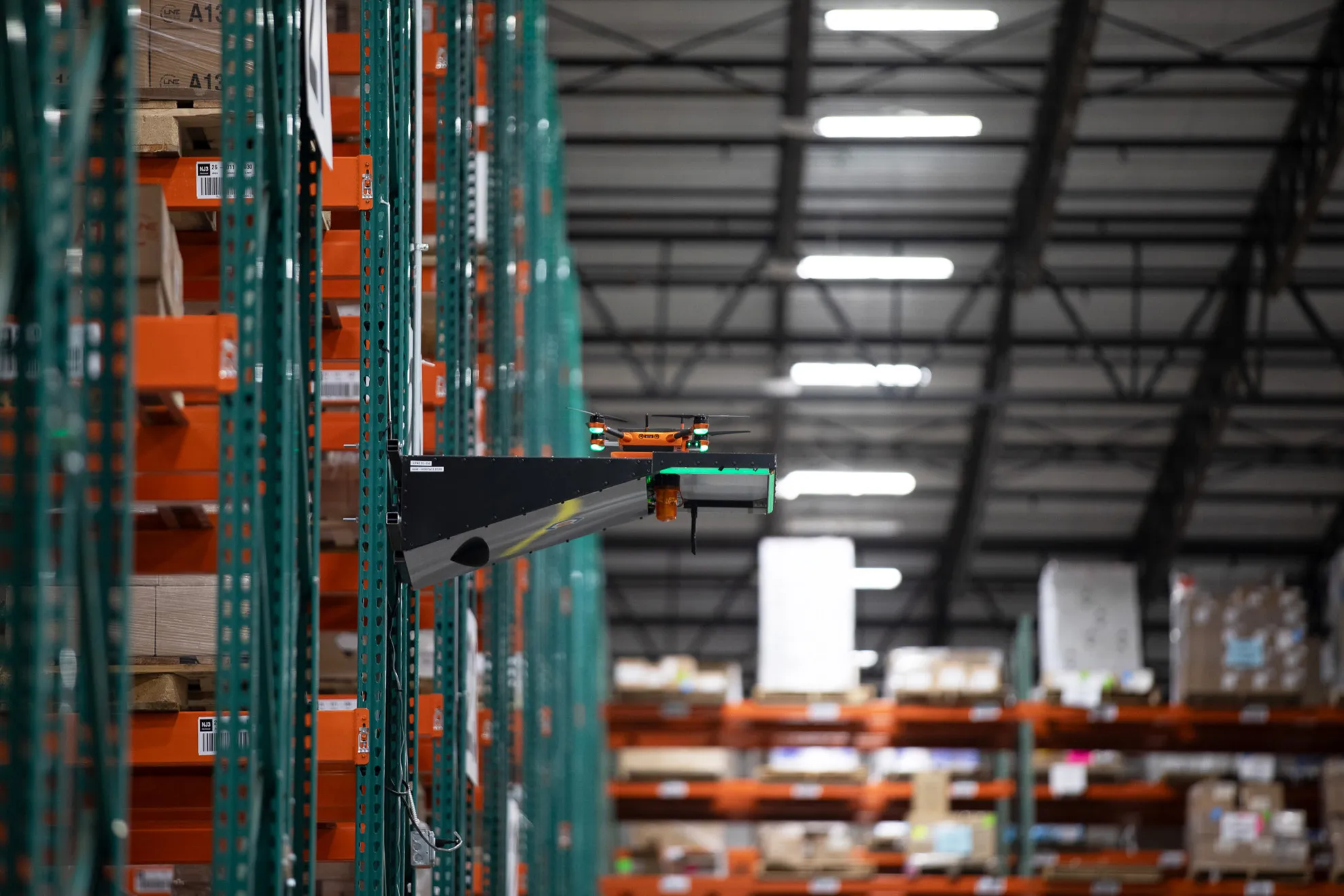
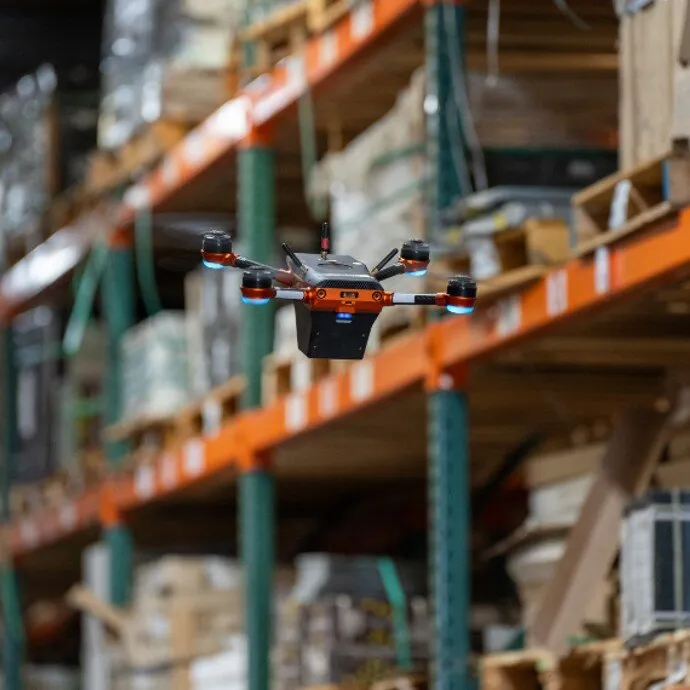
Corvus One navigates purely on computer vision — no LIDAR, no GPS, no Wi-Fi, no beacons, reflectors, or stickers. That vision-only approach is the platform's core differentiator.
Navigation & avoidance
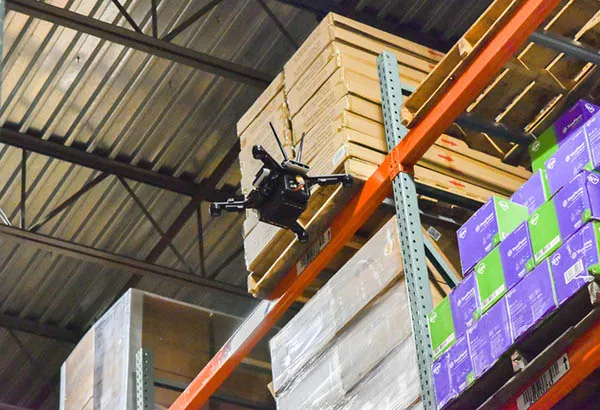
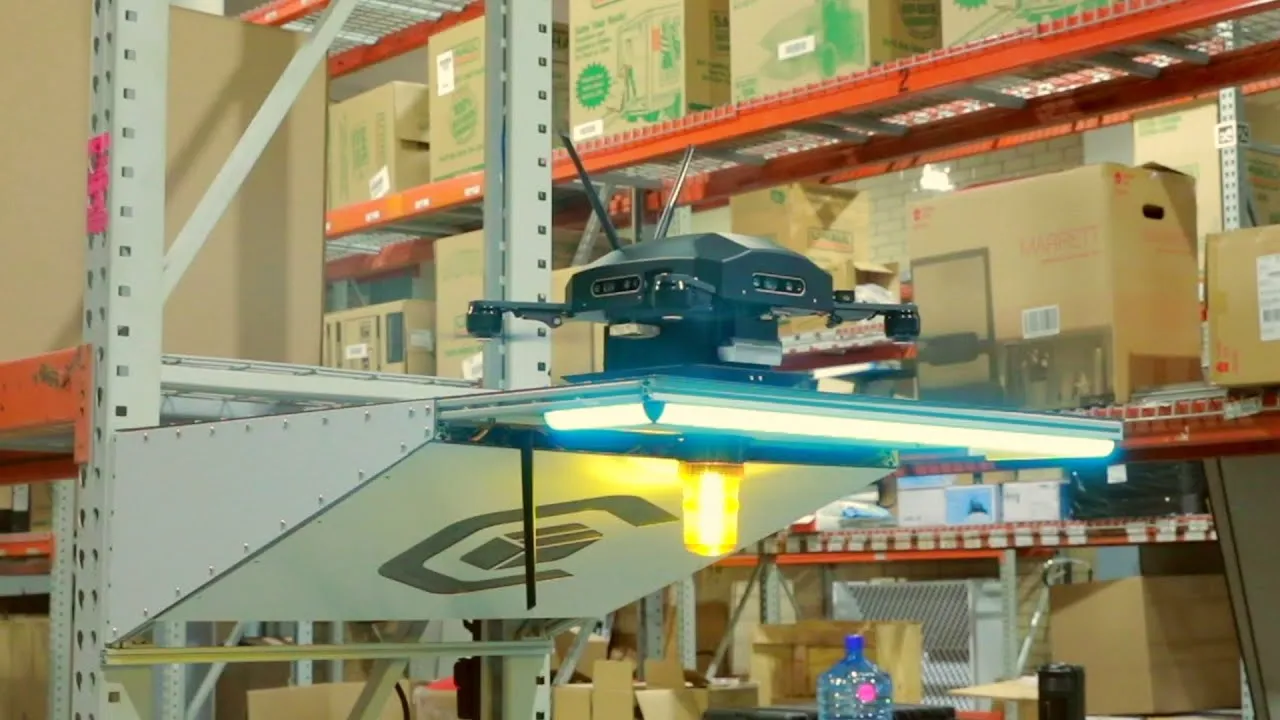
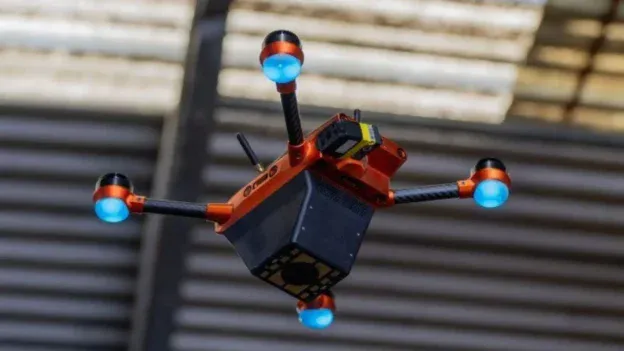
14 onboard cameras for omnidirectional collision prevention and computer-vision navigation — the drone actively ascends, descends, or reroutes around forklifts, people, and other robots rather than just stopping.
Barcode scanning
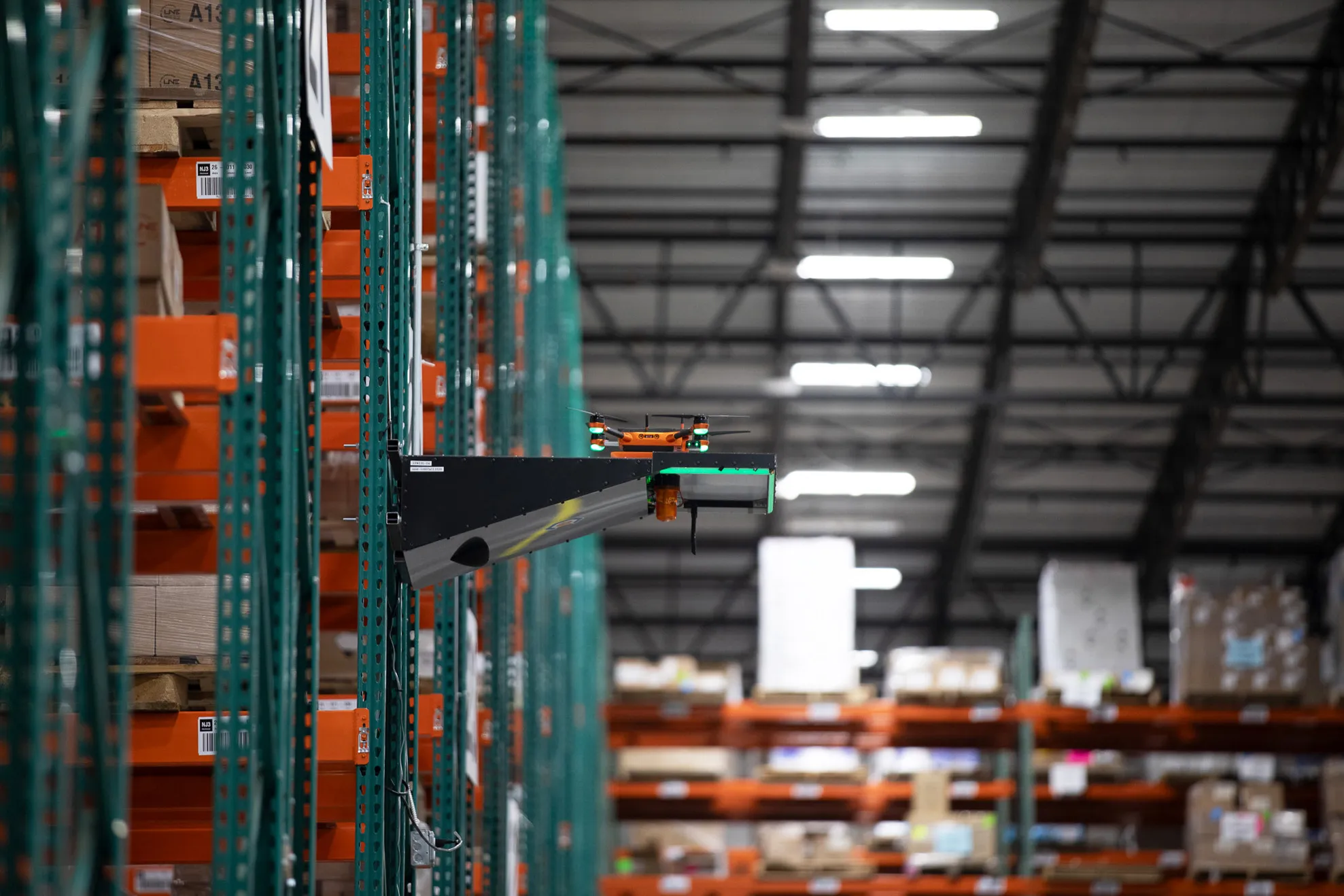
Industrial-grade scanner reads 1D and 2D symbologies in any orientation, anywhere on the front face of a carton or pallet.
Flight behavior
Walking-speed flight, minimum aisle width of 50 inches (VNA-compatible), auto-returns to its cradle to recharge.
Battery
UL 2054 certified (TÜV Rheinland) and UN 38.3 tested for transport safety — standard lithium-battery compliance marks, not flight-specific certifications.
Cold Chain variant
Operates from -20°F up to ambient warehouse temperature with no warm-up cycle, using re-engineered thermal management and flight stabilization to compensate for freezer airflow, frost, and condensation. Launched February 2026; Kroger is a named live customer running it in freezer operations.
Not confirmed on a Corvus-controlled source: exact dimensions, weight, flight speed in mph, or a published flight-time-per-charge figure. We don't repeat unverified third-party numbers here — ask us for facility-specific detail.
Software & Integration
Corvus integrates via the Corvus API and a suite of tools for data import, export, and comparison, with named integrations for Manhattan Associates, Blue Yonder, SAP, Oracle, Körber, Infor, IBM AS/400, Epicor, Tecsys, NetSuite, Microsoft Dynamics, Sage, and Softeon. Enterprise customers can keep data on-premises or use Corvus's cloud hosting. Through the software platform you select no-fly zones, choose flight behaviors, and set automated schedules — most facilities run missions overnight or off-shift, though lights-out and mixed-shift operation are both supported, and discrepancies are reported to your WMS daily.
Deployment Requirements
Facility footprint is minimal by design — a power drop and an Ethernet connection at each landing cradle, no Wi-Fi network, no beacons, reflectors, or floor markers. Corvus doesn't publish a formal step-by-step site-survey document, but published installation timelines give a real range: MIT News reported roughly one week onsite for a 1-million-sq-ft facility; Corvus's own press states deployment in "less than one week" for the drone hardware itself; full customer rollouts including WMS integration have run anywhere from 2 weeks (Dermalogica) to 30 days (LAPP) to Actel's own quoted ~3 months for a complete proposal-to-go-live program with training included.
On FAA rules: Corvus One operates exclusively indoors. Per the FAA's own guidance, Part 107 and National Airspace System rules generally do not apply to UAS operated entirely indoors — so there's no waiver process or BVLOS authorization to track, because none is required.
Safety & Compliance
Corvus publishes data-security and quality certifications rather than aviation-specific ones (which wouldn't apply to an indoor-only vehicle anyway): ISO/IEC 27001, SOC 2 Type 2, CE marking, and RoHS compliance, plus the UL 2054 / UN 38.3 battery certifications noted above. Obstacle avoidance is 360°/omnidirectional via the 14-camera array, with the drone actively yielding around people and equipment rather than relying on a hard stop.
Maintenance & Support
Corvus One is sold on a Robotics-as-a-Service subscription bundling the drone hardware, the software platform, ongoing updates, and fleet/system maintenance — an operating expense rather than a capital purchase. The Cold Chain variant's RaaS specifically includes automated battery and device health management with no human operator required. Actel's own service commitment layers on top: all maintenance, repairs, and battery replacement, hardware swap units, and firmware/software updates with no multi-year lock-in.
Additional Verified Deployments
MSI Surfaces (Orange, CA)
Accuracy rose from 80% to 99%; physical inventory frequency went from annual to weekly; $110K/year in labor reallocated per site and $1.25M in previously-lost inventory recovered.
Southern Glazer's Wine & Spirits
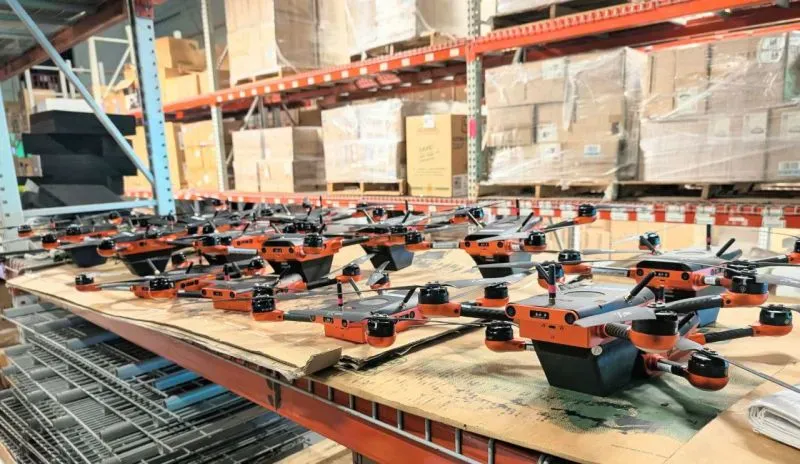
40+ drones across 9 distribution centers; validation frequency went from quarterly to biweekly, surfacing 35,000+ verified discrepancies across roughly 5,000 completed flights.
Dermalogica (Unilever)
80,000 sq ft global HQ/DC went from one dedicated cycle counter and a ~2-month full-warehouse pass to 52 full-warehouse scans a year — a 600% increase in imaging frequency — with zero-downtime setup.
LAPP USA (Brownsburg, IN)
Full-warehouse counts went from 2/year to 26/year; inventory-control headcount dropped from 5 to 2 associates, with 3 redeployed to picking and manufacturing.
Sourced from Corvus Robotics' public product pages and case studies (corvus-robotics.com), plus independent reporting from MIT News, TechCrunch, and Interesting Engineering. Ask your Actel contact for facility-specific specs not covered here.