Robotic Inspection &
Security for Oil & Gas
Robotic inspection and security for oil & gas uses autonomous ground robots and drones to inspect refineries, pipelines, and petrochemical assets and patrol their perimeters — covering hazardous, hard-to-reach areas and building a Process Safety Management documentation trail without exposing people. Actel Robotics deploys them across the Gulf Coast.
Refineries, pipelines, offshore platforms, and petrochemical facilities demand inspection and security that no human team can safely or economically deliver at scale. Autonomous robotics are redefining what's possible.
The Inspection & Security Challenge
in Oil & Gas
The oil and gas industry faces a structural inspection challenge that intensifies every year. Regulatory requirements for equipment inspection are growing more stringent. Facilities are aging. The workforce capable of performing safe, compliant inspections in high-hazard environments is shrinking. At the same time, the cost of equipment failure has never been higher — unplanned downtime in oil and gas costs thousands of dollars per minute, and a single catastrophic failure can result in regulatory shutdown, environmental liability, and human casualties.
Traditional inspection approaches — manual technician rounds, fixed sensor networks, periodic third-party inspections — all face the same fundamental limitation: they are either too expensive to execute frequently, too dangerous to conduct in certain zones, or too inflexible to adapt as the facility evolves. The result is inspection gaps that accumulate until they become incidents.
Texas, Louisiana, and Oklahoma are home to some of the most complex oil and gas infrastructure in the world — Gulf Coast refineries, offshore support facilities, petrochemical corridors, pipeline networks, and storage terminals. Actel Robotics deploys autonomous robotic inspection and security systems specifically designed for these environments.
Hazardous Environment Access
High-voltage zones, hydrogen sulfide exposure, explosive atmospheres, and radiation fields make manual inspection dangerous, expensive, and PPE-intensive — limiting frequency and coverage.
Inspection Frequency
Regulatory and insurance requirements mandate frequent inspection, but the cost and risk of manual inspection typically limits facilities to quarterly or annual schedules — far less than ideal for aging equipment.
Perimeter Security
Large footprint facilities, remote locations, and high-value equipment create perimeter security challenges that traditional guard patrols and static cameras cannot adequately cover.
Robotic Solutions for Oil & Gas Facilities
Autonomous Inspection in High-Hazard Zones
Boston Dynamics Spot navigates refineries, platforms, and processing plants — conducting thermal, visual, acoustic, and radiation inspections in environments that require extensive PPE for human entry. Spot reads gauges, detects anomalies, and logs inspection data directly into your asset management system.

All-Terrain Perimeter Security for Oil & Gas Sites
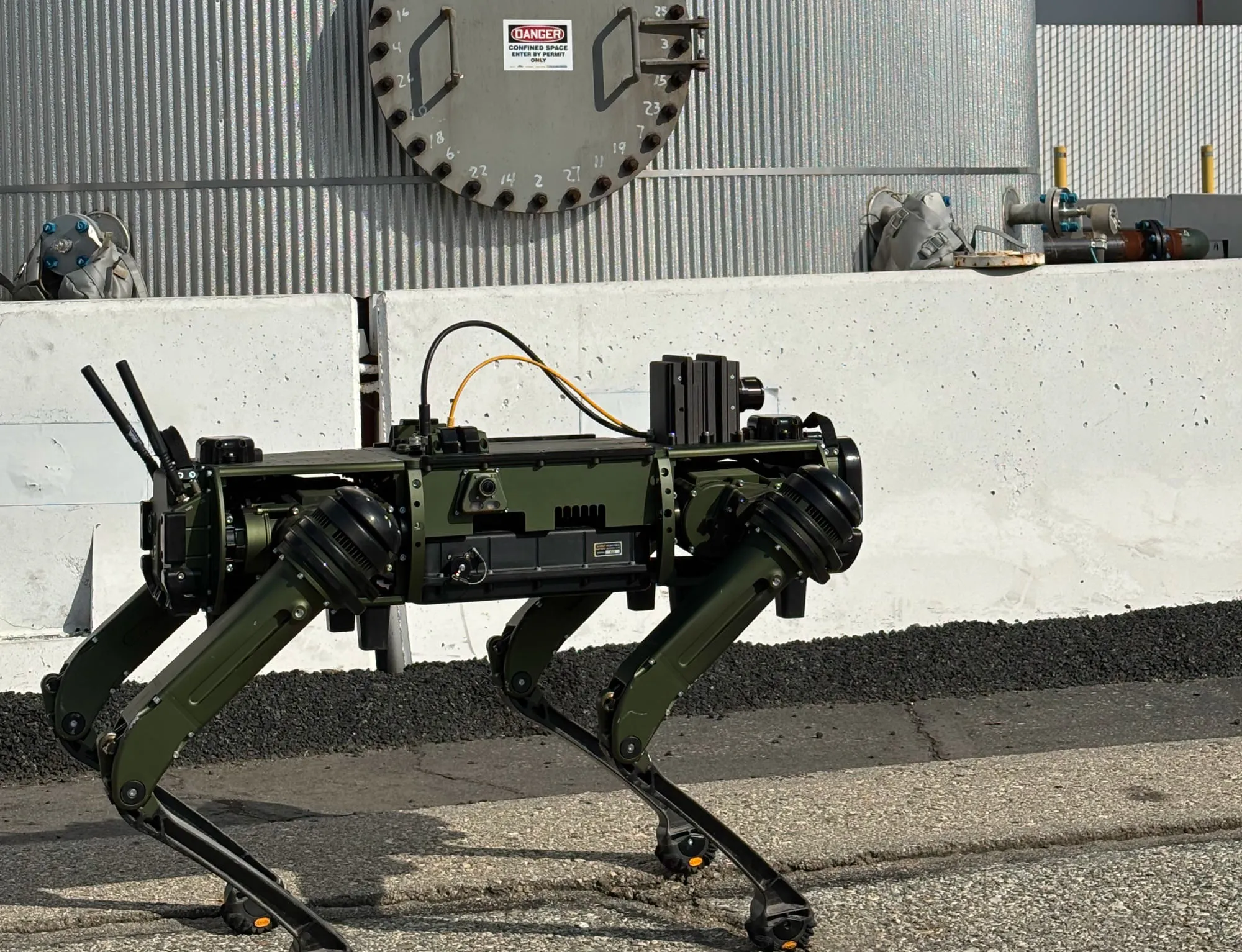
Oil and gas facilities sit on large footprints in remote or semi-remote locations. Traditional guard patrols are expensive, inconsistent, and cannot cover the full perimeter continuously. Ghost Robotics Vision 60 patrols pipelines, tank farm perimeters, and facility boundaries 24/7 — in any weather, over any terrain, at a fraction of the cost of human patrol.
Spot: Autonomous factory and industrial inspection
Spot at work in industrial customer deployments
Serving the Gulf Coast
Oil & Gas Corridor
Actel Robotics is based in Sugar Land, Texas and actively deploys robotic inspection and security systems across the Texas-Louisiana-Oklahoma oil and gas corridor — one of the most concentrated energy infrastructure regions in the world.
Texas
Gulf Coast refineries, Beaumont-Port Arthur petrochemical corridor, Permian Basin infrastructure, Houston Ship Channel facilities, and offshore support operations.
Texas service area →Louisiana
Lake Charles chemical plants, Baton Rouge refinery corridor, New Orleans port operations, and offshore Gulf of Mexico support and inspection services.
Louisiana service area →Oklahoma
Cushing oil hub, Oklahoma natural gas infrastructure, STACK/SCOOP formation support, pipeline monitoring, and midstream facility inspection.
Oklahoma service area →Robotics for Oil & Gas — FAQ
What robots are used in oil & gas facilities?
For inspection, Boston Dynamics Spot runs autonomous thermal, visual, and acoustic missions across process units; for security, Ghost Robotics Vision 60 and the Asylon DroneDog & Guardian system patrol perimeters, tank farms, and pipeline corridors.
Do inspection robots support PSM compliance?
Yes. Running the same route the same way on a schedule builds an audit-ready Process Safety Management trail — thermal baselines, gauge reads, and time-stamped imagery — that turns routine rounds into a defensible record.
Can robots operate around process hazards?
Actel configures missions and routes with awareness of process-hazard proximity, keeping people out of hazardous areas while the robot captures the data. Deployments are scoped to your facility's specific conditions and requirements.
Do they hold up in Gulf Coast heat and weather?
Yes. Spot is rated to operate in temperatures up to 122°F, and the security platforms are IP-rated for all-terrain outdoor operation in heat, humidity, rain, and darkness — suited to Texas, Louisiana, and Oklahoma sites.