
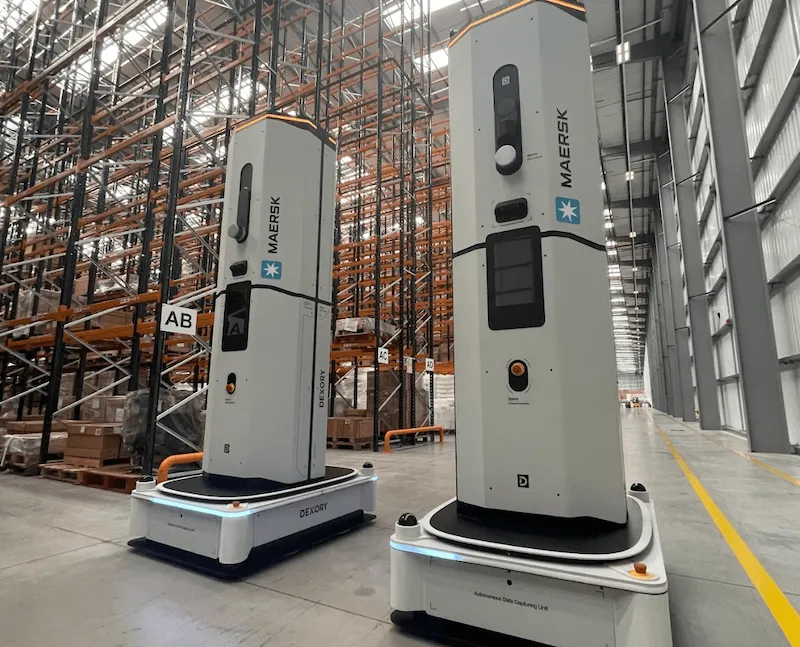
Actel Robotics integrates six different robot platforms from six different manufacturers. That's the whole pitch of working with an integrator instead of a single OEM — but it raises a fair question we don't get asked often enough: how do six brands of robot, built by six companies that have never coordinated with each other, actually share the same warehouse floor without getting in each other's way?
The honest answer requires acknowledging a real technical problem first, then explaining how it's actually solved in practice.
The Real Problem: Robots Don't Natively Talk to Each Other
A robot built by one manufacturer generally has no way to directly communicate with a robot built by a different manufacturer. To a Locus Robotics AMR, a Dexory ground robot rolling through the same aisle isn't a teammate — it's just an obstacle, detected and avoided the same way a forklift or a person would be. Each platform runs its own proprietary fleet-management software (LocusONE, DexoryView, Boston Dynamics' Orbit, Ghost Robotics' Mission Control, Asylon's DroneIQ) with no shared protocol connecting them.
That's not a flaw specific to any one vendor — it's the current state of the entire industry. It only becomes a visible problem when a facility runs more than one platform on the same property, which is exactly the situation Actel's customers are frequently in: a Dexory or Corvus One robot scanning inventory, a Locus AMR fleet moving picks, and a Ghost Robotics Vision 60 patrolling the yard, all at the same site.
The Emerging Fix: VDA5050 and Open Interoperability Standards
The industry's answer to this is VDA5050, an open, vendor-neutral communication standard originally developed in the German automotive sector and now used more broadly to let AMRs and AGVs from different manufacturers report status and receive orders through a common interface. Organizations like MassRobotics have pushed parallel interoperability standards for the same reason: as multi-vendor fleets become normal rather than the exception, facilities don't want to be locked into a single manufacturer's proprietary orchestration software just to avoid a traffic-management headache.
Adoption of these standards is still uneven across the robotics industry — not every platform Actel integrates has adopted VDA5050 today, and we're not going to overstate where the market actually is. What it represents is the direction the industry is moving: toward a future where a single fleet-management layer can genuinely orchestrate robots from different brands, rather than each vendor's software operating in its own silo.
How Actel Coordinates Mixed Fleets Today
Until that future arrives industry-wide, coordinating multiple platforms on one property is handled through a combination of physical planning and operational practice, built into every multi-platform facility assessment:
- Zone-based deployment. Each platform is mapped to a specific operational zone — inventory robots scan racking and floor storage, fulfillment AMRs work pick zones, security platforms patrol the yard and perimeter — minimizing the situations where two different brands need to share the exact same physical space at the exact same moment.
- Schedule-based separation. Where zones do overlap (a loading dock a Dexory robot passes through on its route, for instance), missions are scheduled to avoid simultaneous occupancy rather than relying on the robots themselves to negotiate priority.
- Shared obstacle-avoidance as the baseline safety layer. Every platform Actel deploys — regardless of brand — is built to detect and route around dynamic obstacles, which includes other robots. This isn't coordination in the orchestration sense, but it's the reason two different brands operating in proximity is safe today even without a shared fleet-management layer.
- One integrator holding the whole map. The practical advantage of going through Actel rather than buying each platform direct is that one team has visibility into all the zones, schedules, and routes across every platform on the property — instead of five different vendors each optimizing their own robot's routing in isolation, with no one accountable for how they interact.
What This Means for Your Facility
If you're only ever deploying one platform, none of this matters yet. But most facilities that start with one use case — inventory accuracy, say — end up adding a second or third within a year or two, because the operational case for automation rarely stops at the first problem it solves. Planning for that from the start, even if you're only signing for one platform today, means your facility layout and mission scheduling won't need to be redesigned from scratch when the second platform arrives.
See how the six platforms Actel integrates compare on our compare robots page, review the terms you should look for in any multi-vendor contract in our Buyer's Guide, or contact us for a facility assessment that maps out zoning and scheduling before you commit to a single platform, let alone several.