Autonomous Security &
Inspection for Construction
Autonomous security and inspection for construction uses all-terrain ground robots and drones to patrol theft-prone job sites 24/7, document site progress and conditions, and cover uneven, muddy ground that fixed cameras and wheeled systems cannot. Actel Robotics deploys and helps monitor it across Texas, Louisiana, and Oklahoma.
Active construction sites are among the most theft-prone and hazard-dense environments in any industry. Autonomous robotic patrol and inspection systems protect your people, equipment, and schedule around the clock.
Construction Sites: High Value,
High Risk, Always Vulnerable
Construction sites represent a unique security and safety challenge that intensifies with project scale. Equipment worth millions sits exposed overnight and on weekends. Materials are stockpiled in the open. The perimeter is porous by nature — dozens of subcontractors, delivery vehicles, and workers flow in and out daily. And unlike a permanent facility, the asset footprint changes constantly: what was a clear field last week is now a maze of equipment, temporary structures, and stored materials.
The U.S. construction industry loses more than $1 billion annually to equipment theft — and that figure understates the full cost. Stolen equipment means project delays, insurance claims, rental costs, and schedule penalties that can dwarf the value of the equipment itself. Add in unauthorized access liability, OSHA compliance documentation requirements, and the cost of human guard patrols across large acreage, and the security problem becomes a significant line item on every major project budget.
In Texas, Louisiana, and Oklahoma — where large-scale energy infrastructure, commercial development, and industrial construction projects are constant — these challenges are amplified by site scale, remote locations, and the high value of the equipment deployed.
Equipment Theft
Construction equipment theft costs the U.S. industry $400M+ annually. Excavators, generators, copper wire, and tools disappear overnight and on weekends when static cameras provide the only deterrence.
Safety Compliance
OSHA documentation requirements for hazard identification, site progress documentation, and safety compliance are labor-intensive to fulfill manually — and expensive when violations are found.
Perimeter Coverage
Large construction sites span acres. Human security patrols cannot cover the full perimeter continuously. Coverage gaps are predictable — and exploited.
Robotic Security & Inspection
for Construction
All-Terrain Perimeter Patrol — Day and Night
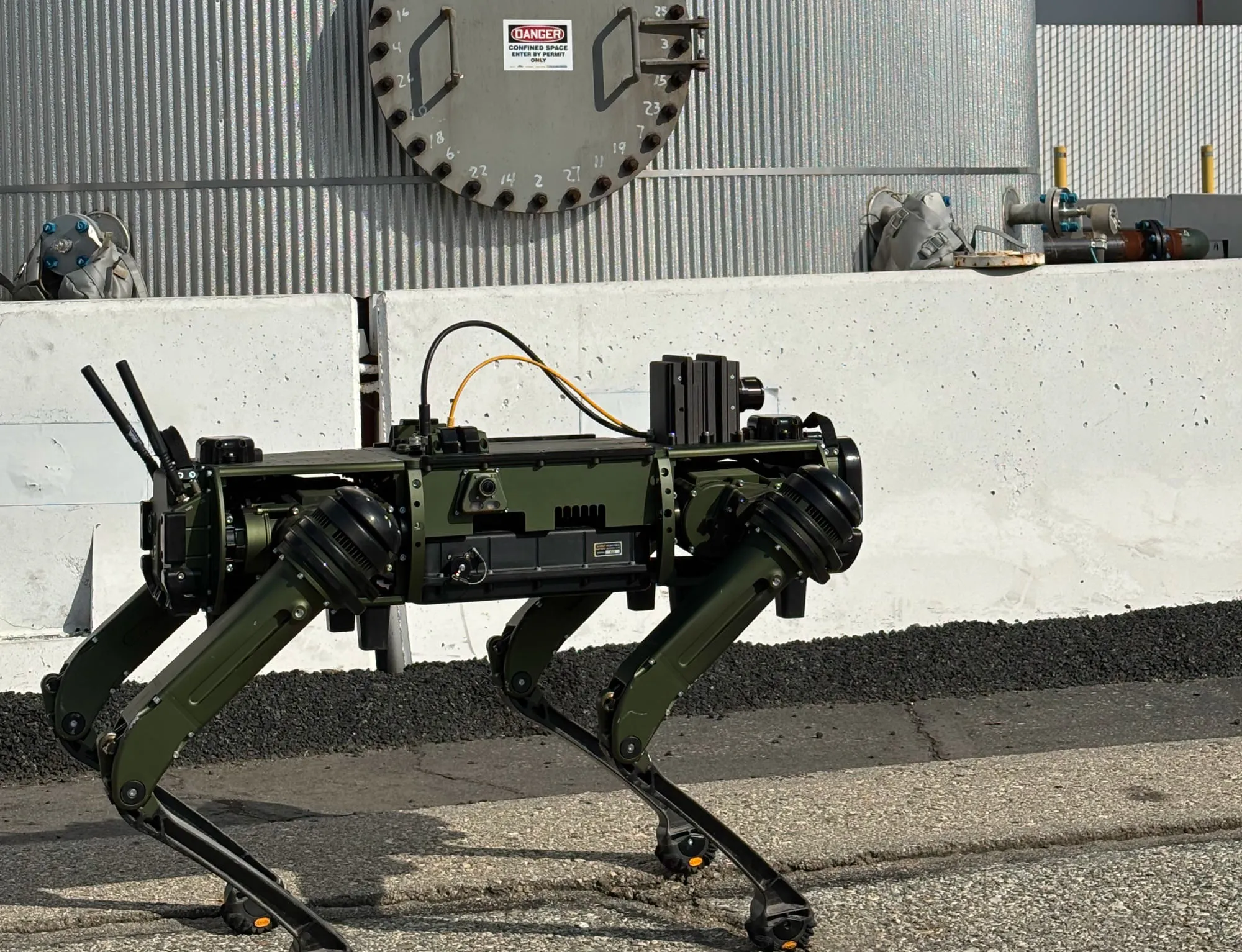
Ghost Robotics Vision 60 covers construction site perimeters in terrain conditions that defeat wheeled systems. Over debris, through mud, around equipment — continuously, without shift changes, fatigue, or gaps. Every patrol is logged and documented.

Aerial + Ground Security for Large Sites
For large-acreage construction sites, Asylon's integrated platform combines the Guardian aerial drone with DroneDog ground patrol — managed by the Robotic Security Operations Center (RSOC) with 24/7 human oversight. The aerial drone provides rapid response and wide-area surveillance while the ground robot handles detailed perimeter inspection.
Site Documentation, Progress Tracking & Safety Compliance
Spot is increasingly deployed on construction sites not just for security but for inspection and documentation — walking the site autonomously to capture 3D LiDAR scans for digital twin creation, comparing as-built conditions to design drawings, and documenting safety compliance for OSHA records.

Asylon: DroneDog & Guardian — Frontline Security
Asylon DroneDog-2: 24/7 Construction Security
Robotics for Construction — FAQ
How do robots secure a construction site?
All-terrain ground robots such as Ghost Robotics Vision 60 patrol the site 24/7 with thermal and visual sensing, detecting and documenting intruders and events in real time and covering ground fixed cameras miss — a visible deterrent plus an evidence trail.
Do security robots work on rough, muddy construction ground?
Yes. These are IP67 all-terrain quadrupeds built to traverse mud, gravel, debris, and uneven ground where wheeled systems get stuck — exactly the conditions of an active job site.
Can robots help reduce equipment theft?
Construction sites are among the most theft-prone environments in any industry. Continuous autonomous patrol deters theft and vandalism, and time-stamped documentation of every pass supports response and insurance claims.
Can the same robots document site progress?
Yes. The visual and thermal data captured on patrol doubles as a consistent record of site conditions and progress over time, useful for project management as well as security.