Robotics ROI at Chemical-Complex Scale:
CF Industries Donaldsonville
CF Industries' Donaldsonville Nitrogen Complex, on the Mississippi River in Donaldsonville, Louisiana, is publicly reported as the world's largest nitrogen complex — six ammonia plants, five urea plants, four nitric acid plants, three UAN plants, and one DEF plant across 1,400 acres with deep-water dock, pipeline, and rail access. A complex at this scale makes the ROI case for inspection, security, and material-handling robotics unmistakable — and Actel Robotics serves the Louisiana industrial corridor it sits in.
Why Donaldsonville Is a Benchmark for Chemical-Complex Scale
CF Industries' Donaldsonville Nitrogen Complex is publicly identified as the largest nitrogen complex in the world, combining six ammonia plants, five urea plants, four nitric acid plants, three UAN plants, and a diesel exhaust fluid (DEF) plant on a single 1,400-acre site along the Mississippi River. The complex has its own deep-water dock along with pipeline and rail access, supporting reported production capacity of up to 8 million tons per year.
A facility of this scale is a useful reference point precisely because it makes the automation math straightforward: many co-located process units each requiring hazardous-zone inspection, plus constant inbound and outbound bulk-material movement across dock, pipeline, rail, and truck. The same automation logic applies at smaller chemical and industrial plants throughout Louisiana and the wider Gulf Coast — just with smaller numbers.
Disclosure: Actel Robotics is not affiliated with, endorsed by, or a current vendor to CF Industries. This facility is referenced as a publicly known example of scale within the region Actel Robotics serves.
Where Automation Pays Off in a Large Chemical Complex
Hazardous-Zone Inspection
A complex with this many co-located ammonia, urea, nitric acid, and UAN units has an equally large number of inspection points in zones where manual entry carries real safety and PPE overhead. Autonomous ground robots handle repeat rounds without repeated human exposure.
Bulk Material & Loadout Logistics
Deep-water dock, pipeline, and rail access mean constant inbound and outbound bulk-material movement. Tracking that flow accurately is a warehouse and yard-inventory automation problem at industrial scale.
Perimeter Security
A 1,400-acre industrial site with river, rail, and pipeline infrastructure has a large perimeter to secure. Continuous robotic patrol closes coverage gaps that a fixed camera network and a limited guard force cannot.
Robotics Built for This Environment
Autonomous Inspection Across Co-Located Process Units
Spot conducts thermal, visual, and gas-leak inspection rounds across ammonia, urea, and nitric acid process units and hazardous zones — building an audit-ready inspection record without repeated human entry into high-hazard areas.

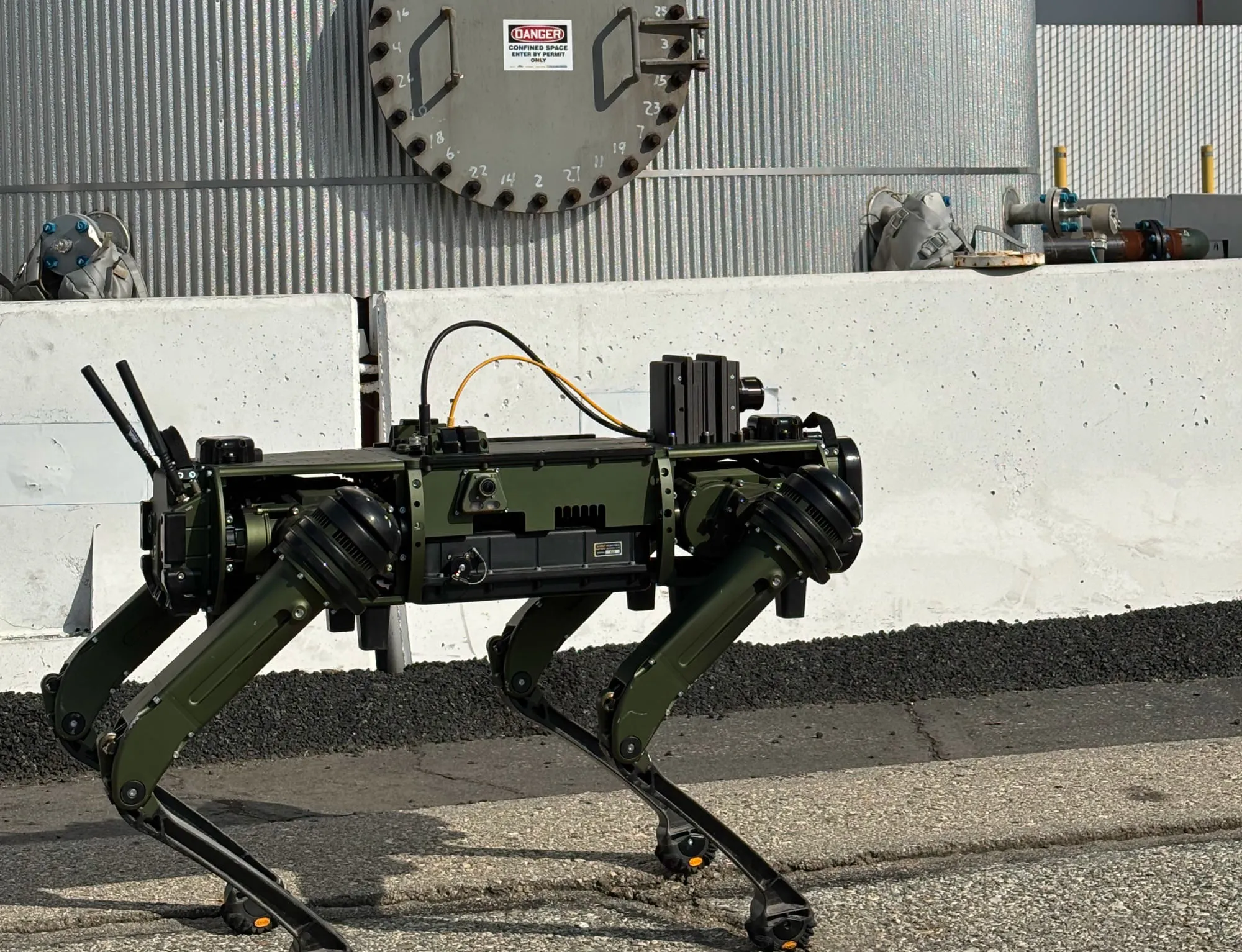
All-Terrain, All-Weather Perimeter Coverage
Vision 60 and Asylon's DroneDog and Guardian system extend continuous coverage across a large, river-front industrial site — in Gulf Coast heat, humidity, and rain — at a fraction of the cost of a comparable human guard force.
Serving Louisiana's Industrial Corridor
Actel Robotics is based in Sugar Land, Texas and serves industrial and chemical-processing sites across Louisiana as part of its broader Texas, Louisiana, and Oklahoma coverage area.
CF Industries Donaldsonville & Chemical-Complex Robotics — FAQ
Is Actel Robotics affiliated with CF Industries or the Donaldsonville complex?
No. CF Industries' Donaldsonville Nitrogen Complex is referenced here as a publicly known example of chemical-complex scale in the Louisiana industrial corridor Actel Robotics serves. Actel Robotics is an independent, authorized robotics integrator and is not affiliated with, endorsed by, or a vendor to CF Industries unless a specific engagement is separately disclosed.
Why does a chemical complex of this scale matter for robotics ROI?
A complex with this many co-located process units multiplies the number of hazardous-zone inspection points and the volume of bulk material moving in and out by dock, pipeline, rail, and truck. Autonomous robots amortize the cost of covering that many points and that much material flow, which is where the ROI case is strongest relative to a single, smaller plant.
What kind of robots suit a large fertilizer or chemical complex?
Boston Dynamics Spot for thermal, visual, and gas-leak inspection rounds across co-located process units and hazardous zones; Ghost Robotics Vision 60 and Asylon's DroneDog and Guardian system for continuous perimeter security across a large industrial site; and warehouse-side automation for tracking bulk raw materials and finished product moving through dock, rail, and truck loadout.