Robotics ROI at Refinery Scale:
Motiva Port Arthur
The Motiva Enterprises refinery in Port Arthur, Texas is the largest petroleum refinery in North America, processing roughly 630,000–730,000 barrels per day. Facilities at this scale make the clearest possible case for why autonomous inspection, security, and warehouse robotics deliver measurable ROI — and Actel Robotics serves the Beaumont-Port Arthur corridor it sits in.
Why Port Arthur Is a Benchmark for Refinery Scale
Owned by Saudi Aramco, the Motiva Port Arthur refinery is publicly reported as the largest refinery in North America by throughput, alongside the country's largest base oil plant and an integrated chemical complex on the same site. It anchors the Beaumont-Port Arthur petrochemical corridor — one of the densest concentrations of refining and chemical processing infrastructure in the United States.
A facility of this scale is a useful reference point precisely because it makes the ROI math for robotics unambiguous: thousands of inspection points, miles of perimeter, and enormous MRO parts and spares inventory supporting continuous operations and turnarounds. The same automation logic scales down to mid-size refineries, chemical plants, and industrial sites across Texas, Louisiana, and Oklahoma — just with smaller numbers.
Disclosure: Actel Robotics is not affiliated with, endorsed by, or a current vendor to Motiva Enterprises. This facility is referenced as a publicly known example of scale within the region Actel Robotics serves.
Where Automation Pays Off in a Large Refinery Complex
Inspection Coverage
A refinery of this scale has thousands of inspection points across process units, tank farms, and pipe racks. Manual inspection frequency is capped by labor cost and hazardous-zone access; autonomous robots remove both constraints.
Perimeter Security
Miles of perimeter and multiple high-value zones make continuous human patrol prohibitively expensive. All-terrain, all-weather robotic patrol closes coverage gaps at a fraction of the labor cost.
MRO & Spares Warehousing
Turnaround planning depends on knowing exactly what parts and materials are on hand, where, and in what condition — a warehouse automation and inventory-accuracy problem at real scale.
Robotics Built for This Environment
Autonomous Inspection in High-Hazard Process Units
Spot conducts thermal, visual, and acoustic inspection rounds in energized zones, toxic atmospheres, and confined process areas — building an audit-ready inspection record without repeated human entry.

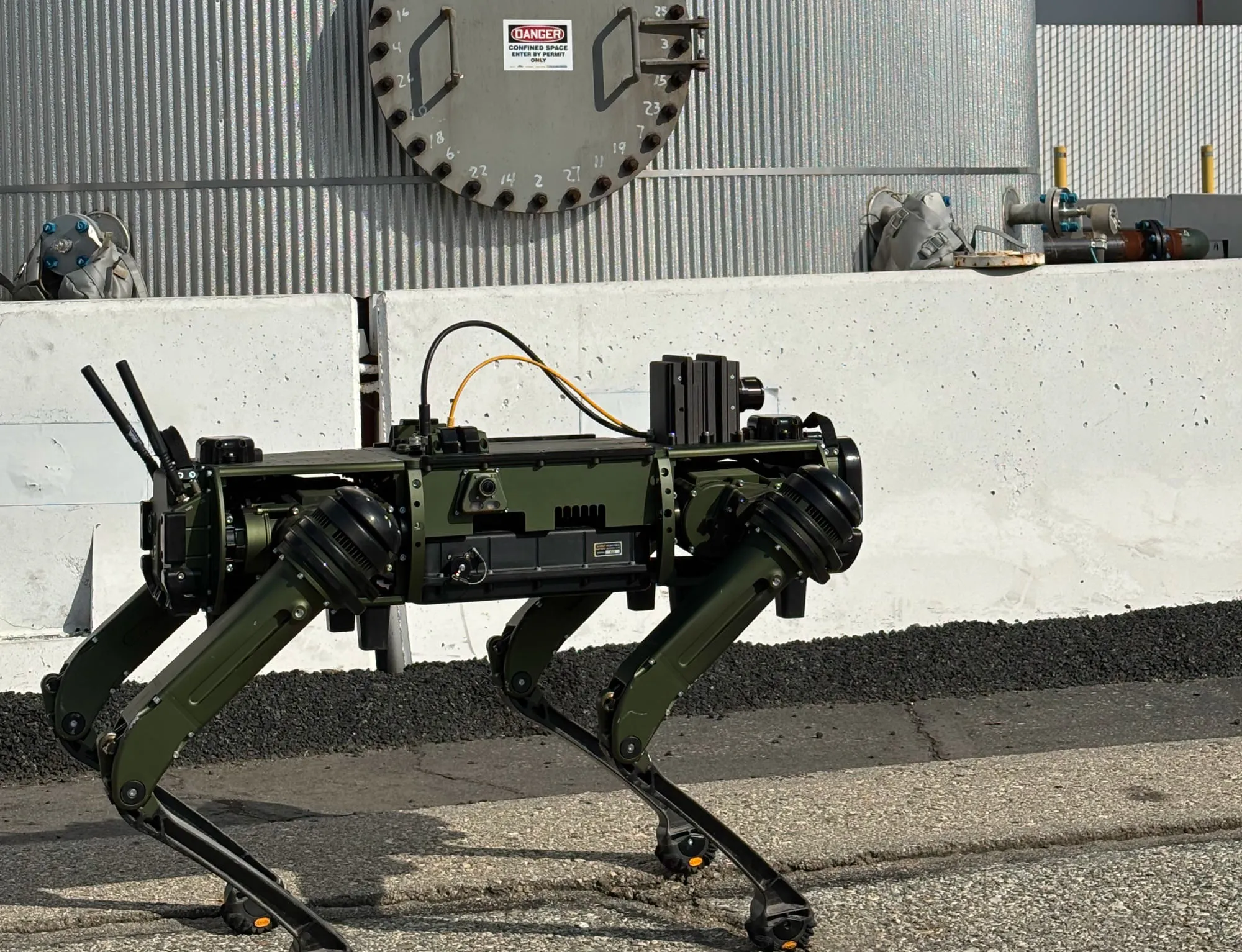
All-Terrain, All-Weather Perimeter Coverage
Vision 60 and Asylon's DroneDog and Guardian system extend continuous coverage across large, remote perimeters — in Gulf Coast heat, humidity, and rain — at a fraction of the cost of a comparable human guard force.
Serving the Beaumont-Port Arthur Corridor
Actel Robotics is based in Sugar Land, Texas and actively serves the Beaumont-Port Arthur petrochemical corridor as part of its broader Texas, Louisiana, and Oklahoma coverage area.
Motiva Port Arthur & Refinery-Scale Robotics — FAQ
Is Actel Robotics affiliated with Motiva or the Port Arthur refinery?
No. Motiva's Port Arthur refinery is referenced here as a publicly known example of refinery scale in the Beaumont-Port Arthur corridor Actel Robotics serves. Actel Robotics is an independent, authorized robotics integrator and is not affiliated with, endorsed by, or a vendor to Motiva Enterprises unless a specific engagement is separately disclosed.
Why does refinery scale matter for robotics ROI?
At refinery scale, inspection frequency, perimeter length, and hazardous-zone coverage requirements multiply the cost of manual labor and the risk of coverage gaps. Autonomous ground robots and drones amortize that cost across thousands of inspection points and miles of perimeter, which is where the ROI case becomes strongest relative to smaller facilities.
What kind of robots suit a large refinery complex?
Boston Dynamics Spot for thermal, visual, and acoustic inspection inside process units and hazardous zones; Ghost Robotics Vision 60 and Asylon's DroneDog and Guardian system for all-weather perimeter security across large footprints; and warehouse-side automation for MRO parts and spares inventory supporting turnaround planning.