Robotics for
Data Centers
Data center robotics combines autonomous thermal inspection — which catches overheating in power and cooling equipment before it causes an outage — with 24/7 robotic perimeter security across large campuses. Actel Robotics deploys both across Texas, Louisiana, and Oklahoma as the region's data-center buildout accelerates.
A data center's two biggest operational risks are an equipment failure that takes the facility down and a physical breach of a high-value site. Autonomous robots address both — continuously, and with a documented record.
Uptime and Security, at Campus Scale
Data centers run on two non-negotiables: the power and cooling must never fail, and the site must never be breached. Both are hard to guarantee with people alone. Thermal faults in electrical distribution, transformers, switchgear, UPS systems, and cooling develop quietly and are easy to miss between manual rounds — until one causes an outage that costs far more than the inspection ever would. Meanwhile the campuses are large, remote, and high-value, and a guard force cannot watch every meter of perimeter at once, in every condition, around the clock.
This is a natural fit for autonomous robotics, and the timing is pointed. Data-center construction has become one of the fastest-growing drivers of industrial demand in Texas, with major AI and hyperscale investments landing in the Dallas and Houston areas — new, high-stakes facilities being built faster than the specialized labor to run and guard them can be hired. Autonomous inspection and security let a lean team cover far more, with a consistent documentation trail that manual rounds never produce.
Robotic Solutions for Data Centers
Thermal Inspection of Power & Cooling
Spot runs autonomous thermal and visual rounds across electrical rooms, transformers, switchgear, UPS, and cooling infrastructure — reading temperatures and gauges the same way every pass and flagging developing hot spots before they become an outage. The result is condition-based maintenance backed by a repeatable, time-stamped record.

24/7 Autonomous Perimeter Security
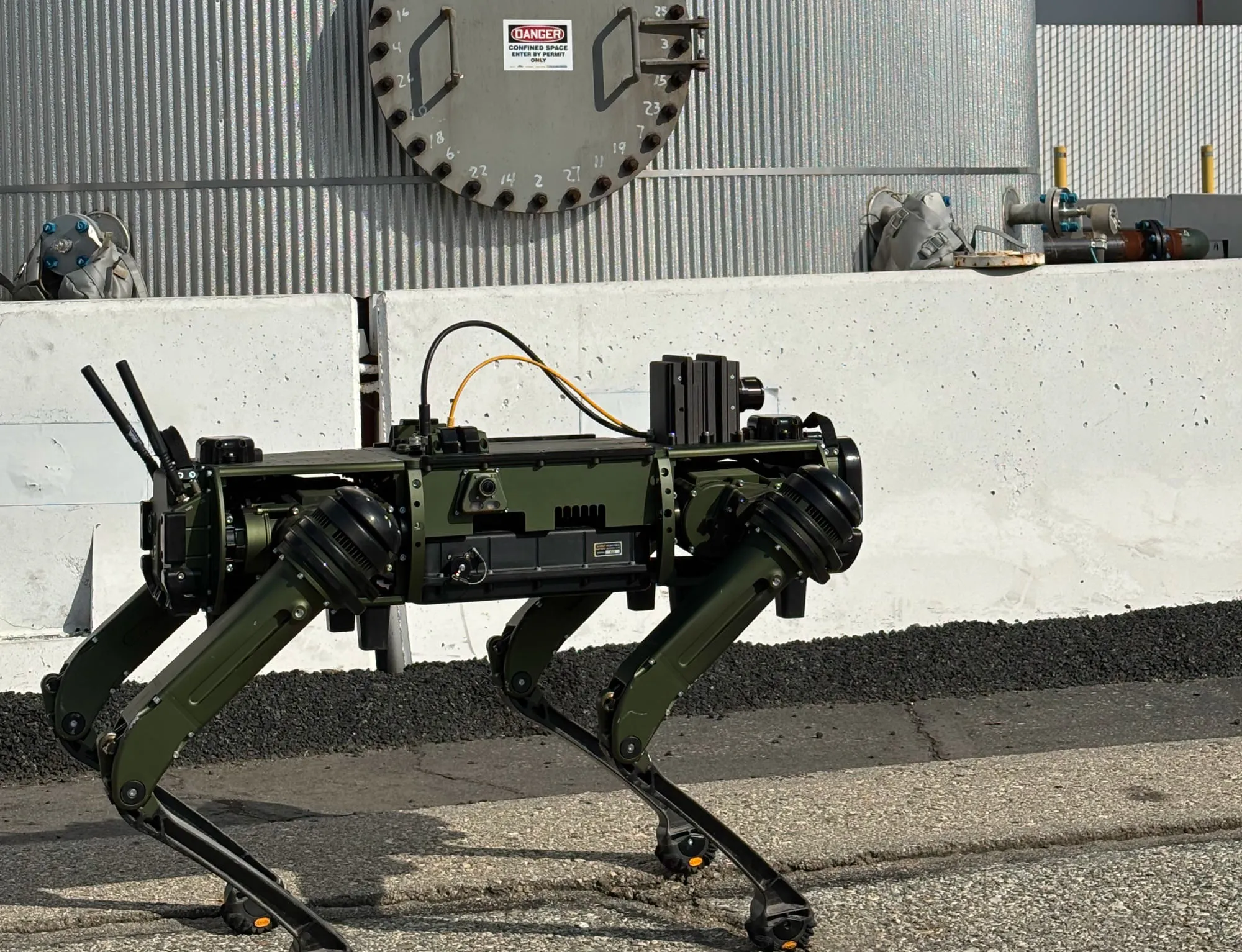
Ghost Robotics Vision 60 and the Asylon DroneDog & Guardian system patrol large data-center campuses continuously — all-terrain, all-weather, day or night — detecting and documenting intrusions and integrating with your existing access control and CCTV. It extends a lean security team's reach without adding proportional headcount.
Serving the Texas Data-Center Boom
The Dallas and Houston areas are among the fastest-growing data-center and AI-infrastructure markets in the country. Actel Robotics deploys inspection and security robotics for these facilities across Texas, Louisiana, and Oklahoma — see the market forces behind the buildout in our Texas Industrial Robotics Adoption Index, and related coverage on our critical infrastructure page.
Data Center Robotics — FAQ
How do robots help run and protect a data center?
Two of a data center's biggest risks are equipment failure and physical intrusion. Inspection robots run thermal rounds on power and cooling to catch hot spots before an outage, while ground and aerial security robots patrol the perimeter 24/7 — covering both with one integrated program.
What does thermal inspection catch in a data center?
A Boston Dynamics Spot with a thermal payload detects overheating in electrical distribution, transformers, switchgear, UPS systems, and cooling equipment — surfacing developing faults before they escalate into downtime, on a repeatable, documented schedule.
Can robots secure a large data center campus?
Yes. IP-rated all-terrain ground robots and aerial drones patrol large campuses continuously in any weather, detect and document intrusions, and integrate with existing access control and CCTV — extending coverage beyond what fixed cameras and a guard force can sustain.
Why are data centers adopting robotics now, especially in Texas?
Data-center construction is one of the fastest-growing drivers of industrial demand in Texas, and the facilities pair high uptime stakes with large campuses that are hard to staff — making autonomous inspection and security a strong, timely fit.