
When a facility decides manual picking has hit its ceiling, the fork usually comes down to two very different kinds of automation: fixed systems like conveyor and goods-to-person (G2P) shuttles, or autonomous mobile robots (AMRs) like Locus Robotics. Both can meaningfully lift picks-per-hour. They get there in opposite ways, and that difference matters more than most early conversations give it credit for.
How Fixed Automation Gets There
Conveyor and goods-to-person systems move inventory to a fixed picking station — a shuttle or crane retrieves a tote and brings it to a person who stays in one place all shift. Done right, this produces very high picks-per-hour at that station, because the picker never walks. The cost of that performance is upfront capital and inflexibility: these systems are engineered and installed for a specific facility layout and a specific throughput target, typically take months to design and install, and are expensive to meaningfully reconfigure once they're in. They're a strong fit when volume is high, stable, and predictable enough to justify designing permanent infrastructure around it.
How AMRs Get There
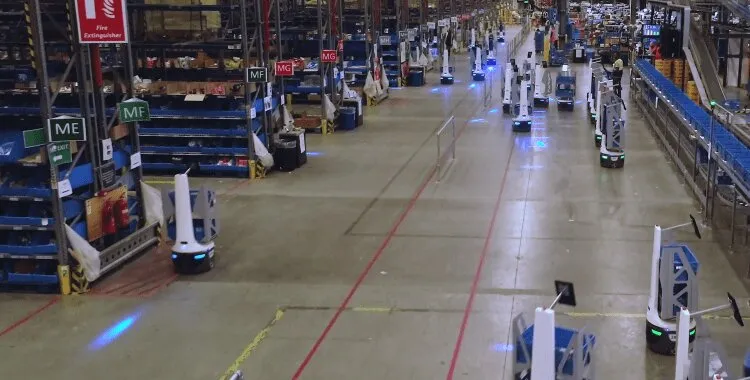
Locus Robotics AMRs flip the model: instead of bringing inventory to a fixed station, the robots bring totes to wherever pickers are working, routing dynamically around the existing racking rather than requiring it to be redesigned. The result is a documented 2–3× lift in picks-per-hour versus pure manual walking-and-picking — not matching the absolute peak of a purpose-built G2P system, but achieved with a fraction of the install time, on existing racking, without a facility redesign.
The practical comparison
- Install timeline: AMRs deploy on existing racking in weeks. Conveyor/G2P systems typically require months of engineering and installation, often with real facility downtime during the build-out.
- Upfront cost: AMRs scale by adding robots to the existing fleet as volume grows. Fixed systems require the full capital investment sized to the design throughput up front, whether or not you hit that volume immediately.
- Flexibility as the business changes: AMRs can be redeployed, added, or removed as SKU mix, seasonality, or facility footprint changes. A conveyor system is fixed infrastructure — reconfiguring it is a capital project, not a software change.
- Peak throughput per station: A well-designed G2P system can outperform AMRs at the single-station level for very high, stable volume. AMRs typically win on total facility flexibility and time-to-value rather than absolute peak throughput at one point.
- Seasonal scalability: AMR fleets can scale up for peak season and back down afterward. Fixed automation is sized once and run at whatever utilization actual volume produces.
Which One Actually Fits
The honest dividing line is volume stability and timeline. A facility with very high, stable, well-forecasted volume and the capital and time to engineer around it can get real value from conveyor or G2P automation. A facility with variable volume, real seasonality, an existing building it doesn't want to redesign, or a need to be live in weeks rather than months is almost always better served by AMRs. Many growing 3PL and e-commerce operations fall squarely into the second category, which is a large part of why AMR adoption has grown as fast as it has — see our broader look at fulfillment during peak season without overhiring for how that flexibility plays out in practice.
What to Evaluate
How stable your actual volume and SKU mix are
Fixed automation is engineered around a specific throughput assumption. If your volume swings seasonally or your SKU profile shifts, that assumption ages quickly.
How much downtime you can tolerate for installation
Model the real cost of months of facility disruption for a conveyor build-out against weeks of AMR deployment on your existing racking.
What "peak throughput" actually needs to mean for your operation
If one station's absolute peak picks-per-hour is the binding constraint on your business, that favors G2P. If total facility flexibility and the ability to scale up and down matters more, that favors AMRs.
See our warehouse fulfillment solutions page for how Actel deploys Locus Robotics, or read more in our fulfillment AMRs explained guide.
Not sure which model fits your facility's volume and timeline? Contact Actel Robotics for a free assessment against your actual numbers.